
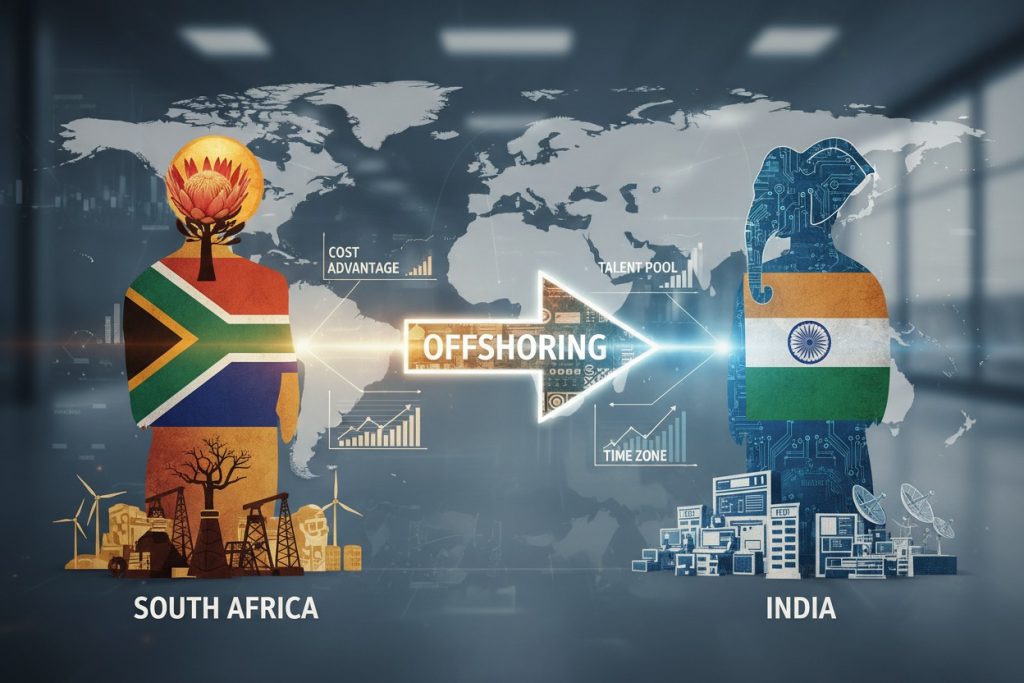
South Africa vs India Offshoring: Which Is Better for Your Business?
Offshoring has become a key strategy for companies aiming to reduce operational costs and access global talent. Two popular destinations are South Africa and India. If you are comparing South Africa vs India offshoring understanding their differences can help you make the right decision for your business.
Overview of Offshoring: South Africa vs India
Both South Africa and India are established outsourcing hubs but they serve slightly different business needs.
India has long been a global leader in IT and large scale outsourcing, while South Africa is rapidly gaining recognition for customer service, BPO and high quality support roles.
When evaluating South Africa vs India, it is important to consider not just cost, but also quality, cultural alignment and long term scalability.
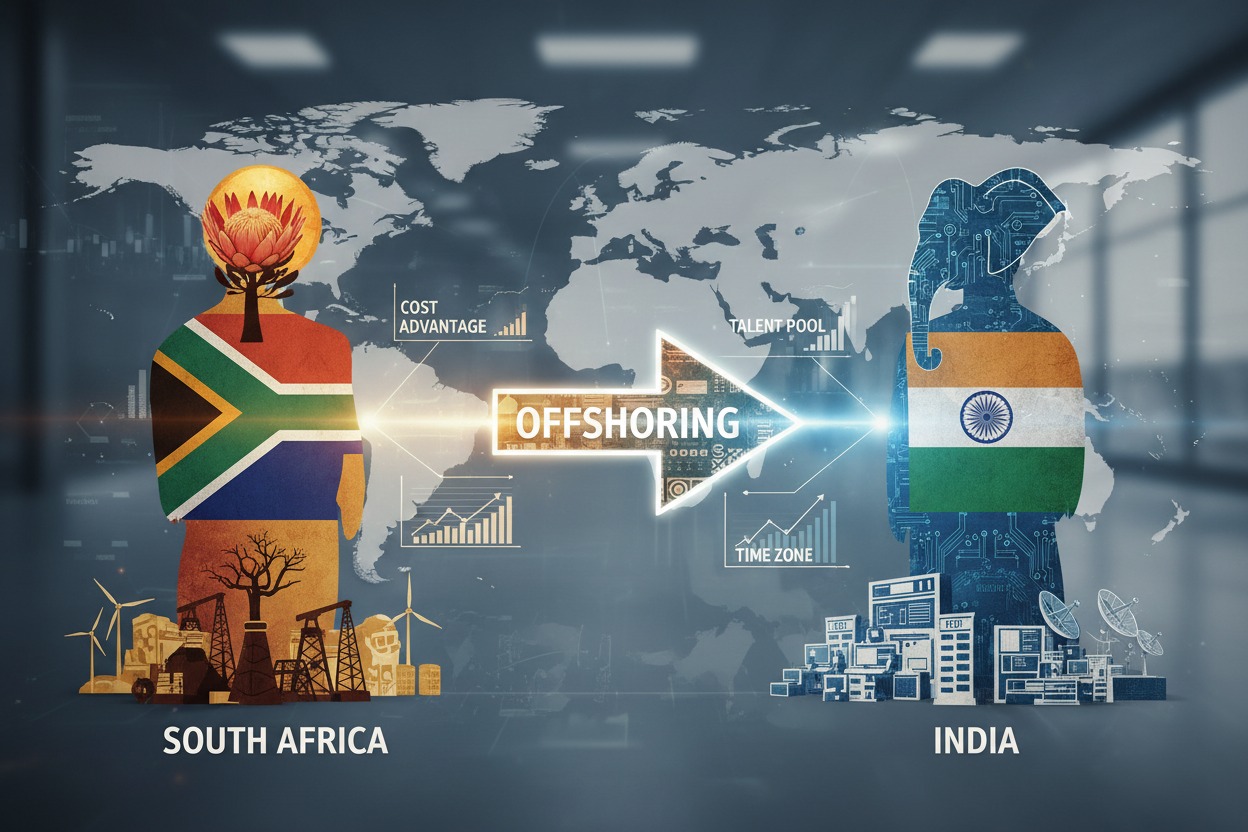
Cost Comparison: South Africa vs India
Cost is often the primary factor in offshoring decisions.
- India: Generally offers lower labor costs due to its large workforce and established outsourcing ecosystem.
- South Africa: Slightly higher than India but still significantly lower than US or European rates.
While India appears cheaper, South Africa often delivers better value in terms of service quality and communication.
Talent and Skill Availability
India has a massive talent pool, especially in IT, engineering and software development. It is ideal for large-scale technical projects.
South Africa, on the other hand that offers a smaller but highly skilled workforce with strong expertise in:
- Customer experience
- Finance and accounting
- Legal process outsourcing
- Creative and digital services
When comparing South Africa vs India offshoring, India wins in volume but South Africa often excels in quality and specialization.
Communication and Language Differences
Communication is a critical factor in outsourcing success.
- South Africa:
- Native level English proficiency
- Neutral accent
- Strong cultural alignment with Western countries
- India:
- High English proficiency but accents may vary
- Communication gaps can occur depending on region
For customer facing roles, many companies prefer South Africa due to its clearer communication style.
Time Zone Advantages for US Companies
Time zone compatibility can impact productivity and collaboration.
- South Africa:
- Offers good overlap with US and UK working hours
- Ideal for real time collaboration
- India:
- Significant time difference with the US
- Often requires night shifts for real time support
In the both offshoring debate, South Africa has an edge for businesses needing synchronous communication.
Infrastructure and Technology
Both countries have strong infrastructure, but there are differences:
- India:
- Mature outsourcing ecosystem
- Extensive IT infrastructure
- South Africa:
- Modern facilities and reliable connectivity
- Growing tech ecosystem
India leads in scale, while South Africa provides a more premium boutique outsourcing experience.
Data Security and Compliance
Data protection is crucial when offshoring.
- South Africa:
- Strong data protection laws aligned with global standards
- Increasing focus on compliance
- India:
- Established legal frameworks
- Widely trusted by global enterprises
Both destinations are secure but your choice should depend on your industry requirements.
Pros and Cons of Each Destination
South Africa Pros
- Excellent English communication
- Cultural compatibility with Western markets
- High quality customer service
South Africa Cons
- Smaller talent pool
- Slightly higher costs than India
India Pros
- Large and scalable workforce
- Lower costs
- Strong IT expertise
India Cons
- Communication challenges in some cases
- Time zone differences for US businesses
How to Choose Between South Africa and India
Choosing between South Africa vs India offshor depends on your priorities:
- Choose India if you need:
- Large scale technical teams
- Lower costs
- 24/7 operations
- Choose South Africa if you need:
- High-quality customer support
- Strong communication
- Better time zone alignment
Many companies even adopt a hybrid approach, leveraging both destinations for different functions.