
How to Successfully Integrate an Offshore Team (Without the Growing Pains)
You have made the decision. You are hiring offshore talent and the cost savings are real. The talent is there. But now comes the hard part: actually making it work. How to Integrate Offshore Teams is often a challenge most companies struggle with not because the talent is bad but because they treat integration as an afterthought instead of a strategy. We have seen many companies integrate offshore teams. Some do it brilliantly. Most stumble. Here’s what separates success from struggle.
The Integration Mistake Everyone Makes
Most companies hire offshore, send login credentials, invite to Slack and hope for the best.Three months later: the offshore team feels isolated, the local team treats them as outsiders, and everyone frustrated.
The problem? You hired remotely but you did not integrate intentionally.
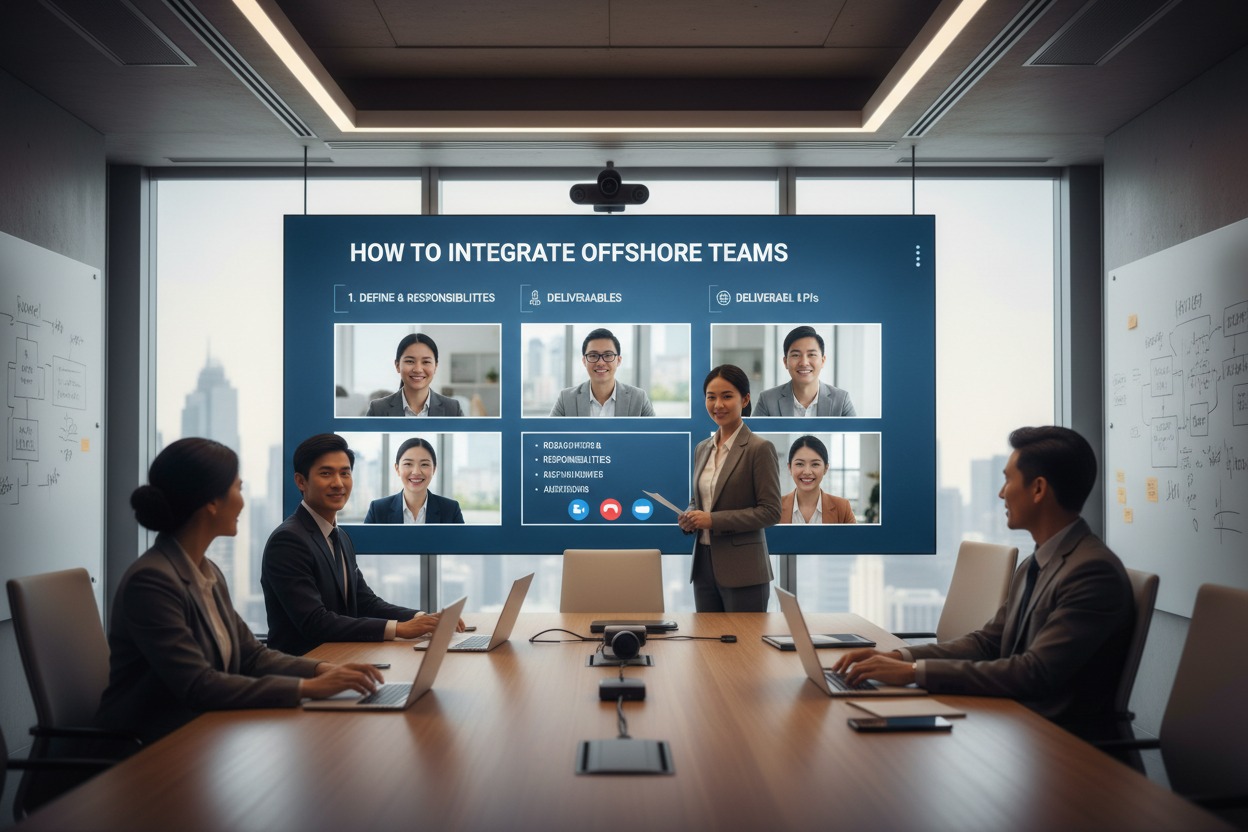
The 4 Pillars of Successful Integration
1. Start Before Day OneIntegration starts two weeks before their first day.
Pre-Day One Checklist:
- Send welcome package (swag, welcome video, team bios)
- Assign an onboarding buddy
- Share company handbook and “how we work” guide
- Set up all tech accounts early
- Schedule Week 1 calendar
- Arrange intro calls with manager and team members
Why this works: By Day One, they’re not a stranger.
2. Overcommunicate Everything
The offshore nightmare: They don’t know if they’re doing well, they miss hallway conversations, they’re unsure if they should speak up.
The solution:
Daily: 15-minute standup, async updates Weekly: 30-minute 1-on-1, team retrospective, Friday wrap-up Monthly: Career development conversation, integration pulse check
The “No Hallway Conversations” Rule: If it’s important, it goes in writing. Document everything in Slack threads, project management tools, and meeting notes.
3. Build Real Relationships
What doesn’t work: Treating offshore members as “resources.”
What works: Treating them as humans with lives beyond output.
How:
- Weekly virtual coffee chats (15 minutes, no work talk)
- Celebrate birthdays, anniversaries, achievements
- Virtual game nights, book clubs, fitness challenges
- Weekly casual sessions—just connection, no agenda
Example: One company does “Tea & Toast Tuesdays”—entire team joins Zoom with coffee and chats. No work. Just humans. Result? Offshore members felt “actually part of the team, not just contractors.”
4. Design for Timezone Collaboration
The mistake: Scheduling all meetings during your hours, forcing offshore to join at midnight.
The smart approach: Design workflows that respect everyone’s timezone.
Identify overlap hours (e.g., UK 11am-5pm = Cape Town 1pm-7pm)
Use overlap for: Standups, collaborative work, decision-making, problem-solving Use non-overlap for: Deep work, async updates, documentation
The Rule: Don’t schedule meetings after anyone’s 5pm unless it’s an emergency.
What Success Looks Like
Month 1: They know who to ask for what, they’ve shipped something small
Month 3: Working independently, comfortable speaking up, building relationships
Month 6: Leading projects, mentoring others, indispensable
Red Flags: Integration is Failing
Communication: Rarely speaks in meetings, last to know decisions, questions unanswered
Relationships: Called “the offshore person,” no personal connections, work-only interaction
Performance: Declining quality, missing deadlines, not asking questions
Cultural: Treated as “less than,” jokes about “offshore quality,” different standards
If you see these, act immediately.
The Integration Checklist
Inclusion: Invited to all meetings, milestones celebrated, included in decisions
Respect: No “offshore quality” jokes, working hours respected, trusted with important work
Career Development: Clear path, training access, promotion opportunities
Belonging: Team friendships, comfortable being themselves, speak up freely
The Truth
Offshore teams don’t fail because of distance.They fail because of disconnection.You can be 9,000 kilometers apart and feel like one team.Or in the same office and feel like strangers.Geography is just geography.
Integration is everything.
If you’ ae building or integrating an offshore team and want to do it right, let’s talk.
Drop us a line or visit https://dux-partners.com
#RemoteWork #OffshoreTeams #TeamIntegration #GlobalTalent #StartupGrowth #RemoteFirst #TeamBuilding